

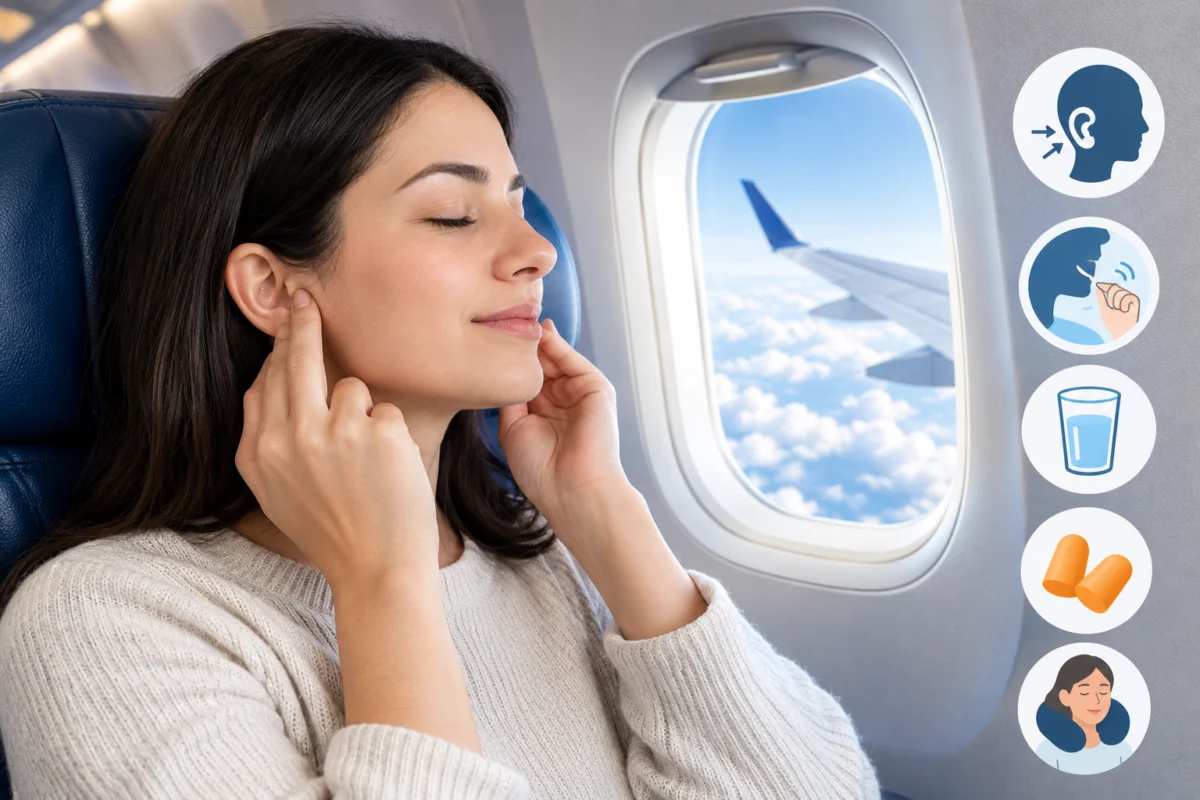
How to Avoid Ear Pain on Flight: 12 Easy Tips :-Flying can be exciting, but ear pain during a flight can quickly make your journey uncomfortable. If you have experienced blocked ears, pressure, popping or sharp discomfort while taking off or landing, you are certainly not alone. Fortunately, there are several simple steps that can make the experience easier.
If you are searching for how to avoid ear pain on flight, the first thing to understand is why it happens. In most cases, flight-related ear pain is caused by a difference in air pressure between the middle ear and the aircraft cabin. Small passages called eustachian tubes normally help balance this pressure. When the pressure changes quickly, these tubes may not open quickly enough, causing discomfort.
The problem is often more noticeable during descent and landing, although some people experience it during take-off as well. Swallowing, yawning and chewing can help open the eustachian tubes and allow pressure to equalise.
This guide explains how to avoid ear pain on flight, what to do before travelling, how to manage pressure during take-off and landing, and when persistent ear symptoms should be checked by a healthcare professional.
What Causes Ear Pain During a Flight?
Before looking at how to avoid ear pain on flight, it is useful to understand what is happening inside your ears.
The middle ear contains air and connects to the back of the nose and throat through the eustachian tube. Normally, this tube opens regularly to maintain similar pressure on both sides of the eardrum.
During a flight, cabin pressure changes as the aircraft climbs and descends. If the eustachian tube does not open quickly enough, the pressure inside your middle ear can become different from the pressure around you.
This condition is commonly called airplane ear or ear barotrauma.
Common symptoms can include:
- Ear pressure
- Earache
- A blocked or full feeling
- Muffled hearing
- Popping or clicking sounds
- Temporary hearing changes
In more serious cases, people can experience severe pain, ringing in the ears, dizziness, significant hearing loss or bleeding.
For most travellers, however, the symptoms are temporary. Knowing how to avoid ear pain on flight can help reduce the chance of significant discomfort during your journey.
1. Swallow Frequently During Take-Off and Landing
One of the easiest answers to how to avoid ear pain on flight is to swallow frequently when the aircraft is climbing or descending.
Swallowing activates muscles around the eustachian tubes. This can help them open and allow air to move between the middle ear and throat.
Do not wait until your ears begin hurting. Start swallowing regularly as the aircraft begins to climb and continue doing so during descent.
You can:
- Take small sips of water
- Drink regularly
- Swallow normally
- Suck a boiled sweet
- Chew sugar-free gum
Keeping water and chewing gum within easy reach is especially helpful because you do not need to search through your luggage when the aircraft starts descending.
2. Try Yawning Regularly
Yawning is another simple technique when learning how to avoid ear pain on flight.
A full yawn can help open the eustachian tubes and encourage pressure equalisation. Try yawning several times during take-off and particularly during the descent.
If you cannot naturally yawn, simply opening your mouth widely and moving your jaw can encourage similar movements.
The key is to begin before the pressure becomes uncomfortable.
For passengers who regularly experience blocked ears while flying, combining yawning with swallowing and chewing can provide a practical routine.
3. Chew Gum During Descent
Chewing gum is one of the most convenient options for anyone wondering how to avoid ear pain on flight.
The repeated jaw movement encourages swallowing, which may help the eustachian tubes open.
Keep chewing gum in your hand luggage instead of your checked suitcase. Begin chewing before the aircraft starts its descent and continue through landing if necessary.
Descent is particularly important because the rapid change in cabin pressure can cause noticeable pressure in the ears.
Sugar-free gum is a practical choice for longer journeys because you can continue chewing without consuming large amounts of sugar.
4. Stay Awake During Take-Off and Landing
Sleeping may seem like an excellent way to make a flight pass quickly, but it can make managing ear pressure more difficult.
When you are asleep, you are less likely to consciously swallow, yawn or use pressure-equalising techniques.
If you are particularly interested in how to avoid ear pain on flight, consider staying awake during take-off and landing.
You do not need to remain awake for the entire journey. The most important periods are the climb immediately after take-off and the descent before landing.
Use these periods to drink water, chew gum, swallow and yawn.
This simple change can make it easier to respond when you notice pressure developing in your ears.
5. Keep Yourself Hydrated
Drinking water is another useful part of how to avoid ear pain on flight.
Water does not directly eliminate ear pressure, but drinking encourages swallowing, which can help your eustachian tubes open.
Keep a drink nearby during the flight and take small sips during take-off and descent.
Rather than drinking a large amount at once, frequent small sips can give you repeated opportunities to swallow.
Staying hydrated can also make the overall journey more comfortable, especially on longer flights.
6. Learn the Gentle Valsalva Manoeuvre
The Valsalva manoeuvre is another technique that may help when considering how to avoid ear pain on flight.
To perform it gently:
- Close your mouth.
- Pinch your nostrils shut.
- Gently attempt to breathe out through your nose.
- Stop if you experience pain.
- Repeat gently if needed.
The purpose is to help equalise pressure between the middle ear and the surrounding environment.
The important word is gently. You should never forcefully blow or continue if it causes pain.
If you have an existing ear condition or are unsure whether this technique is appropriate for you, ask a healthcare professional for advice.
7. Avoid Flying With Severe Congestion Where Possible
A blocked nose can make pressure equalisation more difficult.
If you have a significant cold, sinus infection, ear infection or severe nasal congestion, the eustachian tubes may not work normally.
This is why checking your health before travelling can be an important part of how to avoid ear pain on flight.
If you are seriously congested or have an ear infection before your journey, consider speaking with a healthcare professional about whether it is advisable to fly.
People who frequently experience sinus problems or ear pressure may also benefit from discussing their travel plans with a medical professional before a long-haul journey.
8. Consider Pressure-Regulating Earplugs
Some travellers use filtered or pressure-regulating earplugs during flights.
These specially designed earplugs are intended to slow the rate at which pressure changes around the eardrum during take-off and landing.
They may be useful for people who regularly experience pressure discomfort.
However, earplugs should not be considered a guaranteed solution. If you are researching how to avoid ear pain on flight, continue using basic techniques such as swallowing and yawning.
If you decide to use filtered earplugs, follow the manufacturer’s instructions and make sure they fit correctly.
9. Manage Allergies Before Your Journey
Allergies can cause nasal swelling and congestion, which may affect eustachian tube function.
If you experience hay fever or regular nasal congestion, managing your usual symptoms before travelling may help reduce the chance of discomfort.
Your normal allergy-management routine should be discussed with a pharmacist or healthcare professional if you are unsure what is appropriate.
Do not introduce a new medicine simply because you are travelling without checking whether it is suitable for you.
For frequent flyers with allergies, preparation can be an important part of how to avoid ear pain on flight.
10. Be Careful With Decongestants
Some people consider decongestants when looking for how to avoid ear pain on flight, particularly if they are travelling with nasal congestion.
However, decongestants are not suitable for everyone.
Some nasal sprays can provide short-term relief from congestion, but overuse can cause congestion to become worse. Oral decongestants can also have side effects and may not be suitable for people with certain health conditions or those taking particular medicines.
If you are considering a decongestant before flying, ask a pharmacist or healthcare professional whether it is appropriate for you.
Medication should not replace simple pressure-management techniques such as swallowing and yawning.
11. Help Children Manage Ear Pressure
Children can experience airplane ear too, and younger children may struggle to explain exactly what they are feeling.
Parents can encourage swallowing during take-off and landing by giving children drinks or age-appropriate snacks.
Babies may be able to feed or suck during take-off and landing, which naturally encourages swallowing.
Older children may be able to drink water, chew gum if appropriate for their age, or practise yawning and swallowing.
If you are travelling with children and wondering how to avoid ear pain on flight, keep drinks and suitable snacks somewhere they can be accessed easily.
Parents should also avoid giving young children medication such as decongestants unless specifically advised by a healthcare professional.
12. Do Not Ignore Severe or Persistent Symptoms
Most flight-related ear pressure is temporary.
However, severe or persistent symptoms should not simply be ignored.
Seek medical advice if you experience:
- Severe ear pain
- Significant hearing loss
- Persistent muffled hearing
- Severe dizziness
- Persistent ringing
- Bleeding from the ear
- Symptoms that continue for several days
These symptoms could indicate something more serious than ordinary cabin-pressure discomfort.
If you regularly experience severe symptoms after flying, discussing the problem with a healthcare professional before your next journey can help you understand the underlying cause.
What Should You Do Before Your Flight?

Preparation can make a big difference if you want to know how to avoid ear pain on flight.
Before leaving for the airport, consider the following:
Check for Congestion
If you have a severe cold, sinus problem or ear infection, consider getting medical advice before travelling.
Pack Water
Keep a drink available for take-off and descent.
Bring Chewing Gum
Having gum readily available makes repeated chewing easy.
Consider Filtered Earplugs
If you regularly experience pressure discomfort, pressure-regulating earplugs may be worth considering.
Keep Any Usual Medication Accessible
If you normally use medication for allergies or another condition, keep it with you according to your usual medical advice.
Good preparation means you are ready to manage pressure before your ears become painful.
What Should You Do During Take-Off?
If you are specifically searching for how to avoid ear pain on flight, start your routine as soon as the aircraft begins climbing.
Try the following:
- Stay awake.
- Take small sips of water.
- Swallow regularly.
- Yawn frequently.
- Chew gum.
- Use a gentle pressure-equalising technique if necessary.
What Should You Do During Landing?
For many travellers, landing is the most uncomfortable part of the flight.
As the aircraft descends, cabin pressure changes and the middle ear needs to adjust.
If you are trying to understand how to avoid ear pain on flight, pay particular attention during the final part of the journey.
Stay awake and start swallowing before pressure becomes painful. Keep chewing gum available and take small sips of water.
Can You Completely Prevent Airplane Ear?
There is no method that guarantees complete prevention.
Your likelihood of experiencing airplane ear depends on several factors, including your eustachian tube function, congestion, allergies, recent infections and previous experience with flight-related ear pressure.
However, understanding how to avoid ear pain on flight can reduce the likelihood of significant discomfort.
Common Mistakes to Avoid
Knowing what not to do is also part of how to avoid ear pain on flight.
Sleeping During Descent
You may miss opportunities to swallow and equalise pressure.
Waiting Until Your Ears Hurt
Begin swallowing and yawning before the pressure becomes severe.
Blowing Too Forcefully
Pressure-equalising techniques should always be performed gently.
Ignoring Severe Congestion
A blocked nose can make pressure equalisation more difficult.
Taking Medication Without Advice
Not every decongestant is suitable for every traveller.
Ignoring Persistent Hearing Changes
Persistent or severe symptoms deserve professional assessment.
Quick Flight Checklist
Save this checklist before your next journey:
- Drink water.
- Keep chewing gum accessible.
- Stay awake during take-off and landing.
- Swallow regularly.
- Yawn frequently.
- Start pressure-equalising techniques early.
- Consider filtered earplugs.
- Manage allergies and congestion appropriately.
- Ask a pharmacist about medication if necessary.
- Avoid forceful pressure techniques.
- Seek medical advice for severe or persistent symptoms.
Following these steps can make your journey more comfortable and may help reduce pressure-related ear discomfort.
Frequently Asked Questions
How to avoid ear pain on flight naturally?
The simplest methods include swallowing frequently, yawning, chewing gum, drinking water and staying awake during take-off and landing. These actions encourage the eustachian tubes to open and help equalise pressure.
Why do my ears hurt more when a plane lands?
During descent, cabin pressure changes relatively quickly. If the eustachian tubes cannot equalise the pressure inside your middle ear quickly enough, you may experience pain, fullness or muffled hearing.
Does chewing gum help with airplane ear?
how to avoid ear pain on flight:Chewing gum encourages repeated jaw movement and swallowing. This can help the eustachian tubes open, which is why it is commonly recommended during take-off and landing.
Should I sleep during take-off or landing?
If you frequently experience airplane ear, staying awake during take-off and landing can be helpful. It allows you to swallow, yawn and use other pressure-equalising techniques when necessary.
Does drinking water prevent ear pain during flights?
Drinking water can help because it encourages swallowing. Small, frequent sips during take-off and descent can be useful for travellers who experience ear pressure.
Can I fly with a cold?
How to Avoid Ear Pain on Flight: A cold can increase the risk of airplane ear because nasal congestion can interfere with pressure equalisation. If you have significant congestion, sinus problems or an ear infection, consider speaking with a healthcare professional before flying.
What is airplane ear?
how to avoid ear pain on flight :Airplane ear is discomfort caused by an imbalance between the pressure inside the middle ear and the surrounding cabin pressure. Symptoms can include pain, fullness, blocked ears and temporary muffled hearing.
Do earplugs stop airplane ear?
Filtered or pressure-regulating earplugs may help some travellers manage pressure changes. They are not guaranteed to prevent discomfort, so swallowing and yawning remain useful.
When should I see a doctor after experiencing ear pain on a flight?
Seek medical advice if you experience severe pain, significant hearing loss, dizziness, bleeding or symptoms that remain for several days after flying.
Final Thoughts
Knowing how to avoid ear pain on flight can make flying considerably more comfortable.
Most flight-related ear discomfort happens because the pressure inside the middle ear cannot adjust quickly enough as cabin pressure changes. Simple actions such as swallowing, yawning, chewing gum and drinking water can encourage pressure equalisation.
The most important time to use these techniques is during take-off and, particularly, descent. Staying awake allows you to respond quickly when you begin to feel pressure.
If you regularly experience severe airplane ear, have significant congestion before travelling or develop persistent symptoms after a flight, speak with a healthcare professional.
With a little preparation and the right techniques, you can make your next flight more comfortable and spend less time worrying about painful or blocked ears.



Join the conversation