

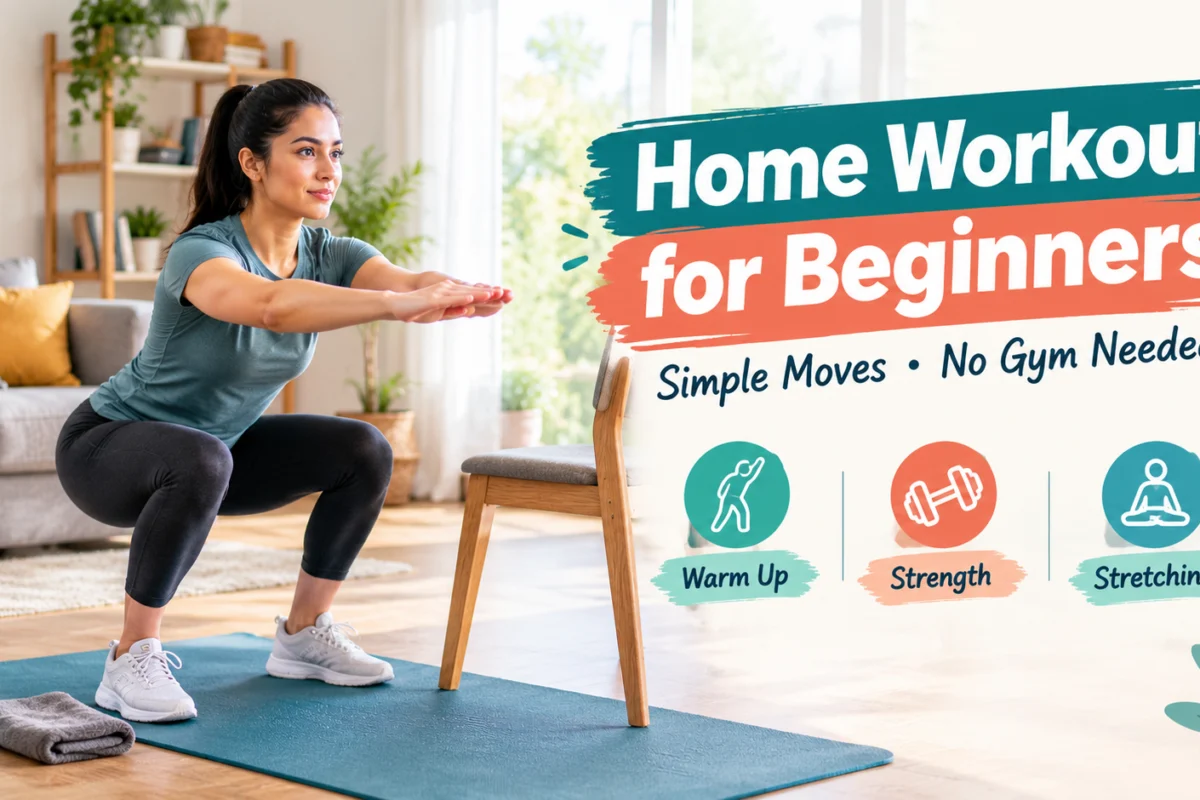
Let’s be honest: most of us have started an exercise plan with big intentions and quietly abandoned it by week two. Gym memberships go unused, running shoes gather dust, and the guilty feeling just keeps growing. If that sounds familiar, you’re in very good company.
The good news is that you don’t need a gym, a personal trainer or expensive kit to get fitter. All you need is a bit of floor space, comfortable clothes and about twenty minutes. That’s exactly why a home workout for beginners is such a brilliant place to begin.
In this guide, we’ll cover everything you need to get going: how to start safely, which exercises to learn first, a complete four-week plan, and how to stay motivated when the novelty wears off. Whether you live in a flat in Glasgow, a terraced house in Leeds or a busy family home in Surrey, you can follow this routine in your living room.
If you’re looking for reliable and affordable travel options, explore Cheap Flights from UK to USA and find the best deals for your next journey.
Why Working Out at Home Makes Sense for Beginners
Walking into a gym for the first time can feel intimidating. Unfamiliar machines, confident regulars and the fear of doing something wrong put plenty of people off before they’ve even started. Training at home removes all of that.
- It’s private. Nobody’s watching, so you can learn at your own pace.
- It saves money. No monthly fees, no travel costs, no peak-time queues.
- It saves time. There’s no commute, which makes it far easier to fit in around work, school runs and everything else.
- It’s flexible. Rain, dark evenings and cold British winters won’t get in your way.
- It builds a habit. Consistency matters more than intensity, and it’s easier to be consistent when your “gym” is ten steps from the sofa.
The best home workout for beginners isn’t the hardest or the fanciest. It’s the one you’ll actually repeat week after week.
How Much Exercise Do You Actually Need?
The NHS recommends that adults aim for at least 150 minutes of moderate-intensity activity a week, plus strength exercises that work all the major muscle groups on two days or more. That sounds like a lot if you’re starting from zero, but it breaks down nicely. Three or four short sessions of 20 to 30 minutes, plus a few brisk walks, gets you most of the way there.
Don’t worry about hitting those numbers in week one. Start small, build slowly and let your body adapt.
Set Realistic Goals From Day One
Vague goals like “get fit” are hard to measure. Try specific targets instead: “complete three workouts a week for a month”, “hold a plank for 30 seconds” or “climb the stairs without getting breathless”. Small, measurable goals give you regular wins, and wins keep you coming back.
Make a quick note of how you feel on day one, or take a photo for your own reference. You’ll be glad of it later. And don’t judge yourself by the scales alone. Energy, mood, sleep and strength usually improve long before the number changes.
Before You Start: A Quick Safety Check
A few sensible precautions go a long way:
- Speak to your GP first if you have a heart condition, high blood pressure or joint problems, are pregnant, or haven’t exercised for a long time. It’s worth checking before you begin any home workout for beginners programme if you have concerns.
- Clear some space. A two-metre square is plenty. Move the coffee table and watch out for pets.
- Wear supportive footwear, or go barefoot on a non-slip mat, depending on the exercise.
- Keep water nearby and stop if you feel dizzy, unwell or notice sharp pain.
- Learn good form before chasing speed. A slow, controlled repetition beats a sloppy, rushed one every time.
Mild muscle soreness the day after is normal. Sharp or lasting pain isn’t, so ease off and seek advice.
What Equipment Do You Need?
Short answer: none. The beauty of a home workout for beginners is that your own bodyweight provides plenty of resistance. That said, a few cheap extras can make life more comfortable:
- An exercise mat for comfort on hard floors
- Resistance bands for adding challenge later on
- A pair of dumbbells, or a couple of full water bottles, for extra load
- A sturdy chair or the edge of a sofa for support and incline moves
- A timer or phone to track work and rest intervals
You can easily get everything for under £20, or spend nothing at all.
Warm-Up: Don’t Skip It
Five minutes of gentle movement prepares your muscles and joints and lowers the chance of injury. Never skip the warm-up, even in a short home workout for beginners session. Do each of these for 30 to 40 seconds:
- Marching on the spot
- Arm circles, forwards then backwards
- Hip circles
- Gentle bodyweight squats
- Shoulder rolls and neck tilts
- Cat-cow stretch on hands and knees
You should feel warmer and looser, not tired.
10 Best Bodyweight Exercises for Beginners
These no equipment workout moves form the backbone of any home workout for beginners and cover your whole body. Learn them slowly, then combine them into routines.
1. Bodyweight squat: Stand with feet shoulder-width apart, push your hips back as if sitting on a chair, keep your chest lifted and your knees tracking over your toes. Drive through your heels to stand. Works thighs and glutes.
2. Wall or incline press-up: Place your hands on a wall or sturdy worktop, keep your body in a straight line, bend your elbows to lower your chest, then push away. Lower the incline as you get stronger. Works chest, shoulders and arms.
3. Glute bridge: Lie on your back with knees bent and feet flat. Squeeze your glutes and lift your hips until your body forms a line from shoulders to knees. Pause, then lower. Great for glutes, hamstrings and lower back.
4. Reverse lunge: Step one foot back, lower until both knees are bent at about 90 degrees, then push back to standing. It’s kinder on the knees than a forward lunge. Hold a wall for balance if needed.
5. Plank (on knees or toes): Rest on your forearms with elbows under shoulders and body in a straight line. Breathe steadily and hold for as long as your form allows. Strengthens your core.
6. Bird dog: On hands and knees, extend the opposite arm and leg, hold briefly, then switch. Improves balance and core stability.
7. Chair dips: Place your hands on the edge of a sturdy chair, shuffle forward, bend your elbows and lower slightly. Works the back of your arms. Keep the movement small at first.
8. Standing march or high knees: Lift your knees to hip height in a steady rhythm. Raises your heart rate without jarring your joints.
9. Superman hold: Lie face down, lift arms and legs slightly and squeeze your back muscles. Strengthens your lower back and improves posture.
10. Dead bug: Lie on your back with arms up and knees bent at 90 degrees. Lower the opposite arm and leg slowly, then switch. A fantastic, gentle core move.
If an exercise feels too hard, make it easier. If it feels too easy, slow it down or add repetitions.
Your 4-Week Home Workout Plan for Beginners
Here’s a simple home workout plan you can follow without overthinking. This home workout for beginners schedule uses three full body workout at home sessions a week, with rest days between so your muscles can recover. A typical week might be Monday, Wednesday and Friday for workouts, a gentle walk on Saturday and rest on the other days.
Week 1: Learn the moves
- Warm up for 5 minutes
- Do each of these for 30 seconds, resting for 30 seconds between: squats, wall press-ups, glute bridges, marching, bird dog, plank on knees
- Repeat the circuit twice
- Cool down for 5 minutes
Week 2: Build a base
- Same exercises, but 40 seconds of work and 20 seconds of rest
- Repeat the circuit twice, or aim for three rounds if you feel good
Week 3: Add variety
- Swap in reverse lunges, dead bugs, chair dips and superman holds
- 40 seconds of work, 20 seconds of rest
- Three rounds
Week 4: Level up
- Combine all ten exercises into one longer circuit
- 45 seconds of work, 15 seconds of rest
- Two or three rounds, depending on your energy
By the end of the month, you’ll have built real foundations: better stamina, stronger muscles and, most importantly, a habit.
A Quick 20-Minute Workout for Busy Days
Short on time? Even a 20 minute workout counts. Try this when life gets hectic:
- 5 minutes: warm-up
- 12 minutes: circuit of squats, incline press-ups, glute bridges and plank, 40 seconds on and 20 off, repeated three times
- 3 minutes: stretching
It’s a perfect fallback for anyone who feels they have no spare time, and proof that a home workout for beginners doesn’t need to take an hour. A short session you actually complete beats a perfect one you keep skipping.
Cool Down and Stretch
Finish every session with five minutes of stretching. Hold each stretch for 20 to 30 seconds without bouncing:
- Quad stretch (standing, pull your heel towards your bottom)
- Hamstring stretch (seated, reach towards your toes)
- Child’s pose for back and hips
- Chest stretch in a doorway
- Gentle neck and shoulder stretches
Stretching isn’t a magic cure for soreness, but it helps you wind down and feel good afterwards.
Can a Home Workout Help With Weight Loss?
Yes, but it’s one part of the picture. A workout for weight loss at home burns calories, builds muscle and improves fitness, yet food choices usually matter just as much. Strength training is particularly useful because muscle helps your body use energy more efficiently.
A consistent home workout for beginners routine, combined with sensible eating, regular walking and decent sleep, is a realistic way to move towards a healthier weight. Aim for gradual progress rather than quick fixes. Crash diets and punishing sessions tend to backfire.
Fuel, Sleep and Recovery
Exercise is only half the story. Your results depend heavily on what you do away from the mat:
- Eat regular, balanced meals with protein, vegetables, wholegrains and healthy fats.
- Drink plenty of water throughout the day.
- Aim for 7 to 9 hours of sleep where possible, because that’s when your body repairs itself.
- Take rest days seriously. Muscles grow stronger during recovery, not during the workout itself.
- Walk daily. Gentle movement keeps you loose and boosts your energy.
How to Progress Safely
After a few weeks, the exercises will start to feel easier, which is exactly the point. To keep improving, change just one thing at a time:
- Add more repetitions or rounds
- Reduce rest time slightly
- Move to a harder variation, such as standard press-ups instead of incline ones
- Slow down the lowering phase of each move
- Add resistance with bands or dumbbells
When you’re ready to move beyond your first home workout for beginners plan, repeat the final week for a fortnight and then try a new routine.
Common Mistakes Beginners Make
Avoid these classic errors and you’ll save yourself a lot of frustration:
- Doing too much, too soon. Enthusiasm in week one often leads to soreness and burnout by week three.
- Skipping warm-ups and cool-downs. They only take ten minutes but protect your body.
- Rushing reps. Control matters more than speed.
- Holding your breath. Breathe out on the effort and in on the return.
- Comparing yourself with social media. Polished clips don’t show the months of work behind them.
- Quitting after a missed session. One skipped day isn’t failure. Carry on tomorrow.
Many people give up a home workout for beginners plan simply because they expect instant results. Fitness takes weeks to show, so be patient with yourself.
How to Stay Motivated at Home
Motivation comes and goes, so build habits that don’t rely on it:
- Schedule it. Put your sessions in your calendar like any other appointment.
- Lay out your kit the night before.
- Start with five minutes. Once you’re moving, you’ll often carry on.
- Track progress. Note reps, how you feel, or simply tick off completed days.
- Find a buddy. Training with a friend over video call keeps you accountable.
- Reward yourself with something that isn’t food, like a new playlist or a relaxing bath.
- Use music. A good playlist can transform a tough session.
If you like guidance, free videos and fitness apps can talk you through every move, which many people find helpful when they’re new to exercise. The key to sticking with a home workout for beginners is making it enjoyable, not a punishment.
Frequently Asked Questions
How often should I do a home workout for beginners?
Three sessions a week with rest days in between is ideal. As your fitness improves, you can add a fourth day or extra walks.
How long should a beginner workout last?
Aim for 20 to 30 minutes, including your warm-up and cool-down. Short, regular sessions work better than occasional marathons.
Can I build muscle at home without equipment?
Yes, especially as a beginner. Bodyweight exercises challenge your muscles enough to improve strength and tone. Progress by increasing reps, slowing the tempo or choosing harder variations.
What is the best time of day to exercise?
Whenever you’ll stick to it. Some people prefer mornings, others evenings. Just avoid training straight after a big meal.
Will I see results in a week?
You’ll probably notice more energy and a better mood within a week or two. Visible changes take longer, usually a month or more, depending on consistency, food and sleep.
Is it okay to work out if I’m sore?
Mild soreness is fine, and light activity like walking or stretching can actually help. If the soreness is severe or sharp, rest, and speak to a healthcare professional if it doesn’t ease.
Final Thoughts
You don’t need a gym, expensive kit or hours of free time to get started. All it takes is a small space, a handful of simple exercises and the willingness to show up. Follow this home workout for beginners plan for four weeks, listen to your body and celebrate the small wins along the way.
Some days will feel easy and others won’t, and that’s completely normal. What matters is that you keep turning up. Pick your three days, clear a little floor space and do your first session today. Your future self will thank you.



Join the conversation