

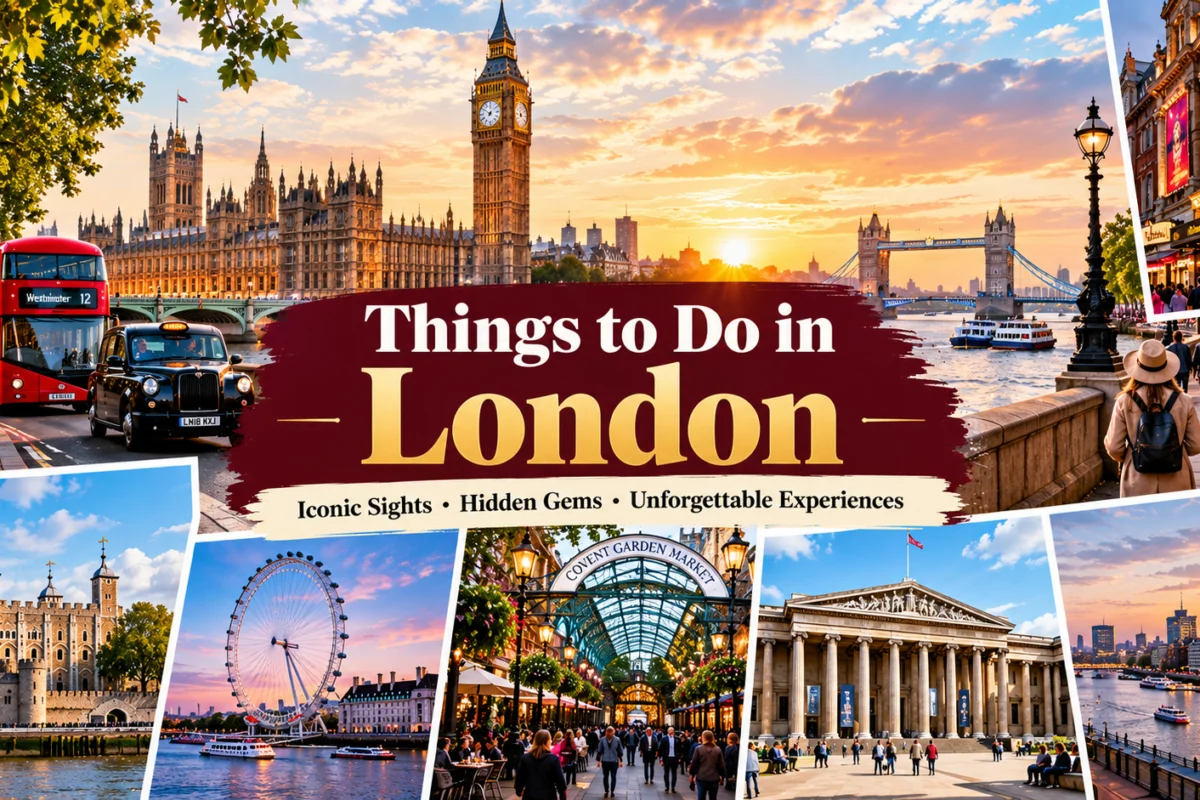
London is one of those cities that rewards you whether you have two days or two weeks. You can stand in front of a thousand years of history before breakfast, eat food from a dozen countries at lunch, and finish the night in a West End theatre. The trouble is not finding things to do in London. The trouble is choosing, because there is simply too much.
This guide is built to help you do exactly that. Instead of a huge list with no order, we’ve grouped the best London attractions by theme and area, added a few honest tips from the way people actually travel, and finished with a simple three-day plan. Whether it’s your first visit or your fifth, you should leave with a clear idea of where to go and how to enjoy it without rushing.
Start With the Big Names Around Westminster
If you’re new to the city, begin around Westminster. A lot of the most famous sights sit close together, and you can see several of them in one relaxed morning on foot.
Big Ben and the Houses of Parliament. The clock tower is officially called the Elizabeth Tower, though almost everybody still says Big Ben. The best photos usually come from Westminster Bridge, with the river in front of you and the Gothic outline of Parliament behind. If you want to go inside, tours of Parliament are available on selected days, so check the official website before you plan around it.
Westminster Abbey. This is where coronations have taken place for centuries, and it is also the resting place of kings, queens, poets and scientists. Give yourself at least an hour. The architecture alone is worth it, and the quiet corners of the cloisters feel a world away from the traffic outside.
Buckingham Palace. The palace is the London residence of the monarch, and the building is most visited from the outside. The Changing of the Guard is a popular ceremony, but timings and days change through the year, so check the official schedule first. Arrive early if you want a decent view, and don’t be disappointed if it’s crowded. Many visitors enjoy the walk through St James’s Park afterwards, which is one of the prettiest short strolls in central London.
Trafalgar Square and The Mall. From the palace you can wander along The Mall to Trafalgar Square, where Nelson’s Column rises above the fountains and the National Gallery sits on the north side. It’s a handy meeting point and an easy place to stop for a coffee.
History You Can Actually Walk Through
London’s past isn’t tucked away in books. It’s all around you, and some of the best things to do in London are really about stepping inside that history.
The Tower of London. Nearly a thousand years old, the Tower has been a fortress, a palace, a prison and a treasury. You can see the Crown Jewels, hear stories from the Yeoman Warders (the “Beefeaters”) who still live on site, and look out for the famous ravens. Plan on two to three hours, and try to arrive close to opening time to avoid the longest queues.
Tower Bridge. Many people confuse it with London Bridge, but this is the one with the blue towers and the lifting road. The Tower Bridge Exhibition lets you cross the high-level walkways, including a glass floor that looks straight down at the river and traffic below. It’s a fun stop if you enjoy a view with a bit of a thrill.
St Paul’s Cathedral. Sir Christopher Wren’s masterpiece has a dome that dominates the skyline. Inside, the Whispering Gallery is famous for its acoustics, and the climb to the top rewards you with one of the best panoramic views in the city.
Churchill War Rooms. Tucked beneath Westminster, this underground bunker was used during the Second World War and has been preserved with remarkable detail. It’s a quieter, more personal way to understand the period, and a good choice if the weather is poor.
Hampton Court Palace. If you have an extra half-day, this Tudor palace on the edge of the city is well worth the trip. Henry VIII’s kitchens, the grand halls and the formal gardens, including the famous maze, make it a favourite for families and history fans.
Museums and Galleries (Many of Them Free)
One of the best-kept secrets about visiting the capital is that many of its top museums are free to enter, which makes culture surprisingly affordable. Special exhibitions may cost extra, but the permanent collections are usually open to everyone.
- The British Museum: Home to the Rosetta Stone, Egyptian mummies and treasures from across the world. It’s enormous, so pick a few galleries rather than trying to see everything.
- The National Gallery: A wonderful collection of European painting in a central location. Even an hour here is time well spent.
- The Natural History Museum: The building is a showpiece in itself, and it’s a hit with children, especially the dinosaur displays.
- The Science Museum: Interactive, lively and ideal for curious kids and adults alike.
- The Victoria and Albert Museum (V&A): A beautiful mix of fashion, furniture, sculpture and decorative arts, with a lovely courtyard café.
- Tate Modern: Housed in a former power station on the south bank, this is the place for modern and contemporary art, with excellent views from the upper floors.
A good rule of thumb is to choose one major museum per day, not two. Museum fatigue is real, and you’ll enjoy each one more if you aren’t racing.
Theatre, Music and Nights Out
London is one of the world’s great theatre cities, so a show deserves a place on any list of things to do in London.
The West End. Musicals, plays and comedy fill the theatres around Leicester Square, Covent Garden and Shaftesbury Avenue. Booking ahead is wise for popular productions, but many theatres also release day tickets and some visitors find good seats on the day. Check official ticket sellers to avoid inflated resale prices.
Shakespeare’s Globe. A reconstruction of the original open-air theatre on the south bank of the Thames. Seeing a performance here, or taking a daytime tour, is a memorable way to connect with the city’s literary heritage.
Live music. From small jazz clubs in Soho to big concerts at major arenas, there’s something on almost every night. If music is your thing, check listings for local venues, because some of the best evenings happen in small rooms rather than famous halls.
A proper pub. Whatever your plans, spend at least one evening in a traditional London pub. Order a pint, find a corner and enjoy the atmosphere. Many serve excellent food, and a Sunday roast is a very British tradition.
Markets, Food and Where to Eat
London’s food scene is as diverse as its people, and exploring it is one of the most enjoyable London sightseeing experiences you can have.
Borough Market. Near London Bridge, this historic market is a paradise for food lovers. Expect fresh produce, cheeses, street food and bakeries. Go hungry and graze your way around instead of sitting down for a full meal.
Camden Market. Quirky, noisy and full of character, Camden mixes street food stalls with independent fashion, vintage finds and live music in the surrounding streets.
Covent Garden. Street performers, boutique shops and a lively piazza make this a good place to spend a relaxed afternoon, especially if you’re heading to a show nearby.
Brick Lane and Shoreditch. This is where you’ll find street art, vintage shops, curry houses and the famous bagel bakeries. It’s a lively area with a creative feel, especially at weekends.
Portobello Road. On Saturdays, the antiques and street market in Notting Hill draws crowds. Even if you buy nothing, the colourful houses and cafés make it a pleasant place to wander.
Afternoon tea. It might be a cliché, but it’s a classic for good reason. Many hotels and tea rooms offer it, and prices vary widely, so look at menus and reviews before you book.
Parks and Green Escapes
London has far more green space than most first-time visitors expect, and these parks are a free and peaceful break from the sightseeing.
Hyde Park and Kensington Gardens. Rent a rowing boat on the Serpentine, stroll to Kensington Palace or simply sit on the grass with a coffee. It’s a big, easy-going space in the centre of the city.
Regent’s Park. Beautiful formal gardens, a boating lake and the nearby London Zoo make this a good choice for families. Climb Primrose Hill on the north side for a classic skyline view.
Richmond Park. Further out, this huge royal park is home to herds of wild deer. It’s an excellent place for walking or cycling, and feels like the countryside though it’s still within London.
Hampstead Heath. Wild, hilly and full of hidden ponds, the Heath offers some of the best views of the city from Parliament Hill. A walk here followed by a pub lunch in Hampstead village is a lovely local-style afternoon.
Kew Gardens. A UNESCO-listed botanical garden with glasshouses, tree-top walkways and plants from all over the world. It’s particularly rewarding in spring and summer, but the glasshouses make it enjoyable in winter too.
Greenwich and the River Thames
The river is the thread that ties London together, and seeing the city from the water gives you a different perspective.
Greenwich. Home to the Royal Observatory and the Prime Meridian line, where you can stand with a foot in each hemisphere. Nearby are the Cutty Sark, the National Maritime Museum and a charming market. Climb up through Greenwich Park for a famous view of the skyline, with Canary Wharf glowing in the distance.
A river cruise or river bus. You can take a sightseeing cruise or simply use a regular river bus service as a scenic way to travel between central London and Greenwich. It’s a relaxing option after a busy morning.
The London Eye and the South Bank. The Eye is a popular choice for views, with a rotation that takes about half an hour. Even if you skip it, the riverside walk along the South Bank, past street performers, bookstalls and galleries, is one of the nicest free things to do in London.
The Shard and Sky Garden. For higher views, The Shard has a paid viewing platform, while the Sky Garden offers free entry but requires booking in advance. Clear days are best, so check the forecast before you pick a time slot.
Neighbourhoods Worth Exploring
Once you’ve ticked off the main landmarks, spending time in individual neighbourhoods is where London starts to feel less like a tourist trail and more like a real city.
- Notting Hill: Pastel-coloured houses, antique shops and a relaxed café culture. Visit on a weekday morning if you prefer fewer crowds.
- Soho and Chinatown: Busy, colourful and packed with restaurants, bars and late-night energy.
- Hampstead: A village feel with beautiful streets, independent shops and easy access to the Heath.
- Shoreditch and Hackney: Street art, independent coffee shops and a creative, youthful vibe.
- Camden Town: Alternative fashion, music history and the canal towpath towards Regent’s Park.
- South Bank and Borough: Culture, food and river views within an easy walk.
Easy Day Trips From London
If you’re staying for a week or more, a day trip is a good way to see more of England without changing hotels.
- Windsor Castle: A royal residence with a pretty riverside town.
- Oxford or Cambridge: Beautiful university cities with historic colleges and gardens.
- Bath and Stonehenge: Often combined in one longer day, either independently or on a guided tour.
- Warner Bros. Studio Tour London: For fans of the Harry Potter films, this behind-the-scenes attraction is located just outside the city and needs advance booking.
- Brighton: A lively seaside city that works well in warmer months.
Best Time to Visit London
You can enjoy the city in every season, but each one has a different feel.
- Spring (March – May): Gardens bloom, the weather improves and crowds are manageable. A great time for parks and walking.
- Summer (June – August): Long days, festivals and outdoor events, but also the busiest and most expensive period.
- Autumn (September – November): Mild weather, golden leaves in the parks and often better availability.
- Winter (December – February): Christmas lights, festive markets and cosy pubs. Days are short and weather can be cold and damp, so pack accordingly.
If you’re after good value and comfortable temperatures, the shoulder months of April–May and September–October are usually a sweet spot for planning your things to do in London.
Getting Around and Saving Money
Getting around is easier than it looks. The Tube, buses, the Elizabeth line and the Overground cover most of the city. You can usually pay with a contactless card or phone, which avoids buying tickets each time. Walking is also a great way to connect sights, especially in central areas where distances are shorter than they appear on the map.
To keep costs sensible:
- Take advantage of the free museums and parks.
- Book popular attractions online ahead of time to avoid long queues.
- Have your main meal at a market or casual restaurant instead of a tourist-heavy spot.
- Walk where you can, and use buses for scenery.
- Wear comfortable shoes. You’ll walk more than you expect.
A Simple Three-Day London Itinerary
Day 1: Royal and historic London. Start with Westminster Abbey and Big Ben, then walk through St James’s Park to Buckingham Palace. After lunch, head to Trafalgar Square and the National Gallery, then finish with an evening stroll along the South Bank.
Day 2: City, river and markets. Begin at the Tower of London, then cross Tower Bridge and wander to Borough Market for lunch. Spend the afternoon at St Paul’s or Tate Modern, and end the day with a West End show.
Day 3: Culture, parks and neighbourhoods. Pick one of the major museums for the morning, then take a break in Hyde Park or Regent’s Park. In the afternoon, explore Notting Hill or Camden before a relaxed pub dinner.
If you have extra time, swap one of these for Greenwich, Kew Gardens or a day trip.
Final Thoughts
There’s no single “right” way to enjoy the capital. Some travellers love the famous landmarks, others prefer markets, parks and local pubs, and many end up with a mix of both. The best things to do in London are the ones that match your pace and your interests, so don’t feel pressured to see everything. Choose a few highlights, leave space for wandering, and let the city surprise you along the way.
Plan ahead for the big attractions, stay flexible for the rest, and you’ll leave with stories well beyond the usual postcards.


Join the conversation