

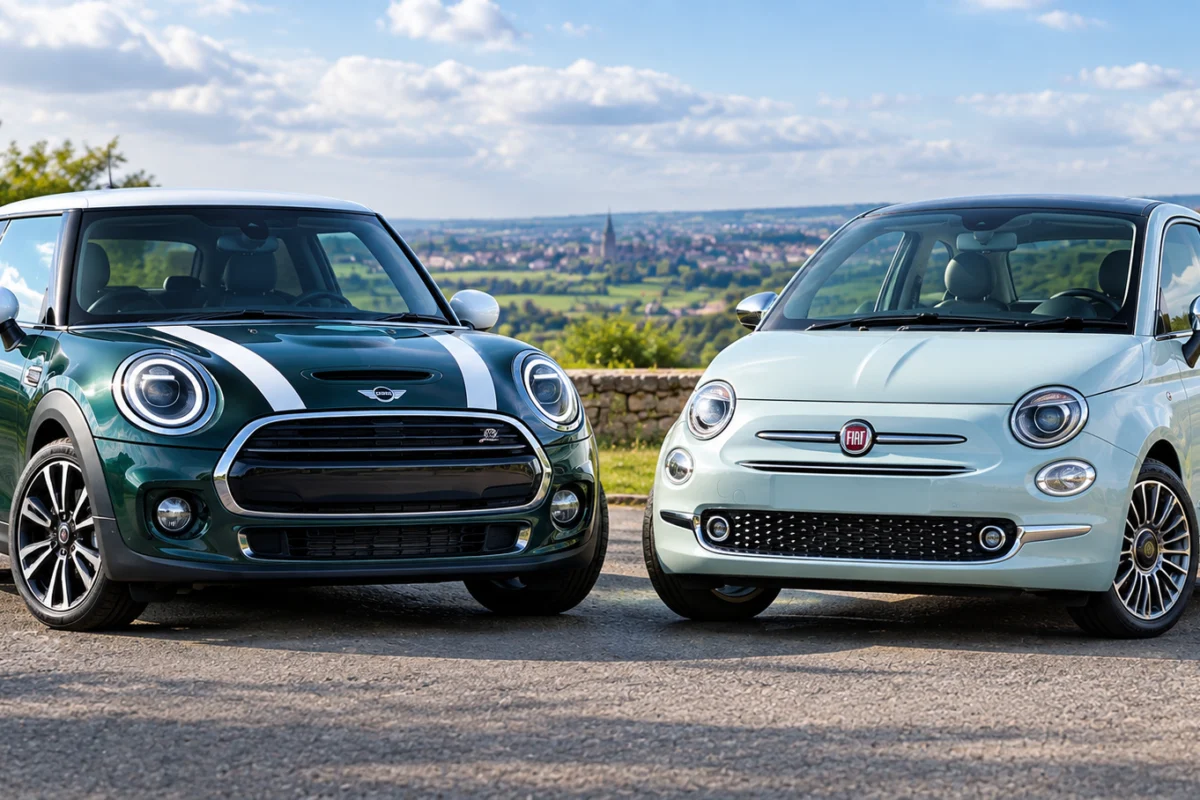
Two Icons, Two Very Different Philosophies
Before diving into the numbers, it’s worth understanding why this Mini Cooper vs Fiat 500 UK comparison even exists in the first place. Both cars are reborn classics — the original Mini launched in 1959, the original Fiat 500 in 1957 — and both modern versions have leaned hard into that heritage rather than running from it. But the philosophies behind them have always differed. The Mini has positioned itself as the more premium, more driver-focused option, historically priced and marketed closer to a junior BMW than a city runabout. The Fiat 500, by contrast, has stayed true to its roots as an accessible, affordable, genuinely small city car, even as it’s grown a modern electric powertrain and updated tech.
That difference in philosophy shapes almost every section of this Mini Cooper vs Fiat 500 UK comparison, so it’s worth keeping in mind as we go through price, performance, and everything in between.
Price: The Biggest Gap in This Comparison
Money is usually where any Mini Cooper vs Fiat 500 UK comparison has to start, and it’s also where the two cars diverge most sharply. Fiat has recently made an aggressive move on pricing, cutting the cost of the entry-level 500e from around £28,000 down to roughly £21,000 — a shift that’s put real distance between it and the equivalent Mini.
On a direct electric-to-electric comparison, the Mini Cooper Electric costs approximately £5,160 more than the Fiat 500e. That’s not a small gap for cars in this size class, and it’s the single biggest factor most buyers weigh up in any Mini Cooper vs Fiat 500 UK comparison. Petrol variants follow a similar pattern, with the Fiat generally undercutting the equivalent Mini across comparable trim levels. Historically, matching a well-equipped Fiat 500 on price meant stepping down to one of the more basic Mini trims, which came with noticeably sparser standard kit — a trade-off worth knowing about if you’re shopping strictly on budget.
Used values tell a similar story. A used 2022 500e with a little over 20,000 miles can be picked up for under £12,000, while a comparable used Mini Electric of similar age and mileage tends to sit a bit higher. If price is your primary concern, this Mini Cooper vs Fiat 500 UK comparison leans firmly toward the Fiat.
What You Get for the Extra Money
That said, the Mini’s higher price tag isn’t for nothing, and no honest Mini Cooper vs Fiat 500 UK comparison would suggest otherwise. For that roughly £5,160 premium on the electric versions, the Cooper typically delivers around 61 miles of additional WLTP range, roughly 25kW faster peak rapid charging, and about 65kW more power than the 500e. On combined scoring across measurable categories, independent EV comparison data has put the Mini Cooper ahead of the Fiat 500e overall, even accounting for its higher price — though the margin is close enough that it genuinely comes down to which categories matter most to you personally.
There’s also a bigger-battery Mini Cooper SE variant that pushes range up toward 240 miles, giving buyers who need more distance between charges a meaningful step up that the current Fiat 500e range simply doesn’t match at the top end.
Running Costs and Charging
Once you own either car, day-to-day costs turn out to be remarkably close, which might surprise anyone expecting the pricier Mini to also be the pricier car to live with. On the electric versions, charging costs land almost identically — around £136 a year apart when calculated on an off-peak home electricity tariff at typical UK rates, covering roughly 8,000 miles annually. That’s a genuinely tight margin in any Mini Cooper vs Fiat 500 UK comparison focused purely on ongoing electricity costs.
Fuel costs on the petrol versions are similarly close. One UK running-cost comparison found both cars costing around £1,195 a year in fuel at 8,000 miles annually, though it still rated the Mini as marginally cheaper on fuel overall once real-world efficiency was factored in. Where the gap widens slightly is efficiency per kilowatt-hour on the EVs — the Fiat has historically returned around four miles per kWh compared with figures closer to 3.6 for the Mini, meaning the Fiat sips its (admittedly smaller) battery a little more frugally, even if the Mini’s bigger pack ultimately delivers more total range.
Insurance, servicing, and depreciation will move the total cost of ownership in either direction depending on your specific circumstances, so anyone doing a serious Mini Cooper vs Fiat 500 UK comparison for budgeting purposes should get personalised insurance quotes for both before making a final call, rather than relying on list prices alone.
Reliability and MOT Pass Rates
This is an area where the Mini pulls ahead noticeably. UK MOT pass-rate data shows the Mini Cooper achieving a 90% pass rate, compared with 79% for the Fiat 500 — a genuinely significant gap for buyers who prioritise long-term dependability over any other single factor. It’s a statistic worth flagging prominently in any Mini Cooper vs Fiat 500 UK comparison, because reliability differences of this size can translate into real money over years of ownership, through fewer unexpected repair bills and less time off the road.
Warranty coverage on both cars sits at a broadly comparable four years and 50,000 miles as standard, so the reliability gap isn’t offset by one manufacturer offering dramatically longer factory cover than the other. If dependability is your top priority, this part of the Mini Cooper vs Fiat 500 UK comparison should carry real weight in your decision.
Driving Experience
Numbers on a spec sheet only tell part of the story, and the way these two cars actually feel from behind the wheel is where a lot of buyers ultimately make up their minds. The Mini Cooper — electric or petrol — is consistently described as the sharper, more engaging drive. Reviewers and owners regularly point to its firmer ride, more responsive steering, and a genuine sense of fun that carries over from decades of Mini’s reputation as the driver’s choice in this segment. On winding B-roads or when merging onto a fast-moving motorway, that extra responsiveness is noticeable, and it’s a major reason the Mini commands its price premium.
The Fiat 500, meanwhile, is generally tuned toward comfort and ease rather than outright excitement. It’s a genuinely relaxed thing to drive, with light steering that makes it particularly easy to thread through narrow city streets and tight parking spaces. For drivers whose journeys are mostly short urban hops rather than open-road blasts, that relaxed character can matter more than outright dynamic ability. This is arguably the crux of the whole Mini Cooper vs Fiat 500 UK comparison from a pure driving standpoint: sharper and sportier versus softer and more forgiving.
Design and Interior
Both cars lean heavily on nostalgia, but they express it differently, and that’s another dimension worth covering in any thorough Mini Cooper vs Fiat 500 UK comparison. The Fiat 500 has kept its rounded, gently curved silhouette largely intact since its 2007 reintroduction, right down to recognisable round headlights and a soft, friendly roofline. It’s often described as the “cuter” of the two, and its compact dimensions make it genuinely pleasant to look at parked on a narrow British street.
The Mini has retained its own design language too — distinctive frameless windows, a wide grille, and rear light clusters that echo the original car’s shape. Inside, the two cabins reflect their differing personalities. The Mini’s interior feels more structured and driver-focused, built around a large circular central display that reduces physical buttons but takes a little getting used to for some drivers. The Fiat’s cabin, by comparison, feels lighter and more open, with a straightforward infotainment layout that owners frequently praise for being easy to use on short daily drives without much of a learning curve.
Neither car is designed with large families in mind — rear seats in both are best suited to occasional passengers or short trips rather than regular use by adults, and boot space in both reflects their city-focused design brief rather than any pretence of practicality. If space matters to you, this Mini Cooper vs Fiat 500 UK comparison won’t produce a clear winner, because neither car was built to solve that problem.
Which One Suits City Driving Better?
If your daily routine is dominated by tight city streets, this section of the Mini Cooper vs Fiat 500 UK comparison matters more than almost anything else. The Fiat 500 is widely regarded as the stronger choice for predominantly urban use. It’s easier to park, its long-range variants have plenty of everyday range for short hops around town, and it’s considerably cheaper to buy in the first place — a combination that’s hard to beat if congested city streets make up the bulk of your driving.
The Mini Cooper can absolutely handle city driving too, and its compact footprint means it’s far from a struggle in tight spaces, but its real strengths show up once you’re out of town — motorway merges, faster A-roads, and the kind of longer trips where its extra range, power, and sharper handling actually get to shine.
Company Car and Tax Considerations
For business users, there’s another layer worth adding to any serious Mini Cooper vs Fiat 500 UK comparison. Both electric variants benefit from the UK’s favourable Benefit-in-Kind rates for EVs, which sit at a low, uniform percentage regardless of make or model. Because that rate is applied to the car’s P11D value, the Fiat’s significantly lower list price means it typically produces a smaller monthly tax bill for company car drivers than the pricier Mini Cooper Electric, even though the percentage rate itself is identical. If you’re choosing a car through a salary sacrifice or company car scheme, running the actual monthly figures for both is worth doing before assuming either option is automatically cheaper.
Depreciation and Resale Value
Resale value is another factor worth folding into any serious Mini Cooper vs Fiat 500 UK comparison, since it quietly shapes the true cost of ownership over three to five years far more than the sticker price alone. The Mini’s stronger brand reputation and better reliability figures tend to support steadier resale values, meaning owners often recoup a slightly higher percentage of their original outlay when it comes time to sell or part-exchange. The Fiat 500, while cheaper to buy outright, has historically depreciated a touch faster in percentage terms, partly a reflection of its lower reliability score and partly simple supply — recent price cuts on new 500e models can also push down the value of slightly older used examples, since buyers naturally gravitate toward the cheaper, more recent stock. Neither effect is dramatic, but anyone running the full numbers on a Mini Cooper vs Fiat 500 UK comparison over a typical ownership period should factor in projected resale value rather than just the purchase price and running costs in isolation.
Insurance Groups
Insurance premiums add one more variable to weigh in this Mini Cooper vs Fiat 500 UK comparison, and the picture here is genuinely close rather than clearly favouring either car. Both sit in relatively low insurance groups for their class, reflecting their compact size, modest power outputs on entry-level trims, and generally low repair complexity. Where things diverge slightly is on the performance-oriented variants — a sportier Mini Cooper S or JCW model will typically land in a noticeably higher insurance bracket than the equivalent Abarth-badged Fiat, simply because of the extra power and the associated repair costs that come with it. For buyers sticking to entry-level or mid-range trims on either side, the insurance gap in this Mini Cooper vs Fiat 500 UK comparison is unlikely to be the deciding factor, but it’s still worth getting personalised quotes for the exact trim and powertrain combination you’re considering before you commit, since real quotes can vary more than published group ratings suggest.
Which Car Should You Choose?
Bringing this Mini Cooper vs Fiat 500 UK comparison to a close, the decision really comes down to your budget and your priorities rather than one car being objectively better than the other.
Choose the Fiat 500 if: you want the lowest possible entry price, you do most of your driving in town, parking space is tight, and you’re comfortable with slightly lower reliability figures in exchange for a genuinely charming, affordable small car.
Choose the Mini Cooper if: you regularly drive on motorways or open roads, you want a sharper, more engaging driving experience, reliability is a top priority, and you’re willing to pay a premium for extra range, power, and driver-focused handling.
Final Verdict
There’s no universally “correct” answer to this Mini Cooper vs Fiat 500 UK comparison, and that’s exactly why both cars continue to sell well in a market full of larger, more anonymous alternatives. The Fiat 500 wins decisively on price and city-friendly practicality, while the Mini Cooper wins on reliability, range, and outright driving enjoyment. Both let a buyer express a bit of personality that’s increasingly rare in the modern small car segment, and either one is a genuinely satisfying choice depending on what you value most.
The smartest way to settle your own Mini Cooper vs Fiat 500 UK comparison is to test drive both back to back, ideally on the kind of roads you actually drive every day — whether that’s tight city streets or longer motorway stretches — and let the car that feels right in your hands make the final call, rather than the spec sheet alone.
Take a moment, too, to sit in the back seat of each car and load the boot with whatever you’d realistically carry on an average week — a couple of bags of shopping, a small suitcase, a pushchair if that applies to you. Neither car was designed with cargo space as a priority, but seeing the real difference for yourself, rather than trusting a litre figure on a spec sheet, often clarifies which trade-offs you’re genuinely willing to live with day to day.

Join the conversation